
Key Takeaways:
- Regular Maintenance is Key: Consistent cleaning prevents odors, bacteria, and drainage issues while prolonging the lifespan of artificial turf.
- Daily and Weekly Care: Remove debris daily and rinse weekly to maintain cleanliness and reset synthetic blades for a lush appearance.
- Stain and Pet Waste Management: Address spills promptly with mild cleaning solutions, and use enzymatic cleaners to neutralize pet odors effectively.
- Seasonal Adjustments: Tailor maintenance routines to seasonal challenges, such as debris in fall or snow in winter, to keep turf in top condition year-round.
Artificial turf is a fantastic option for homeowners who want an evergreen, low-maintenance lawn that adds beauty to their outdoor spaces. At Veteran Patios, we’ve transformed countless yards with high-quality synthetic grass systems. While artificial turf is admired for its convenience, no mowing, watering, or fertilizing, it still requires some regular care to retain its appearance, longevity, and functionality.
This all-inclusive guide will cover everything you need to know about cleaning and maintaining artificial turf. By following these best practices, you can keep your investment pristine for years.
Why Cleaning Artificial Turf is Essential
Though artificial turf is far easier to care for than natural grass, skipping maintenance can lead to problems over time. The vibrancy and structure of your synthetic lawn depend on regular upkeep to combat everyday wear and tear. Here’s why cleaning your turf is critical:
Prevents Odors and Bacteria
Debris such as leaves, dust, pollen, and pet waste can accumulate on your turf, leading to odor buildup and even bacteria or mold. Regular cleaning stops this harmful buildup and keeps your yard hygienic and fresh.
Maintains Drainage
Artificial turf is designed with a specific drainage system. Debris lodged in the infill or base can clog this system, leading to puddling or water damage. Proper cleaning ensures rain and other moisture flow correctly through the turf.
Prolongs Lifespan
Dirt buildup and neglected stains can deteriorate synthetic fibers over time. A good cleaning routine protects your investment by preventing deep damage.
Warranty Protection
Most artificial turf warranties require evidence of routine maintenance. Staying consistent with care spells long-term peace of mind for your lawn and its coverage.
Now that we’ve covered why cleaning is vital, let’s look at how to make it part of your routine.
Establishing a Daily Maintenance Routine
Daily care doesn’t mean investing hours in upkeep. Small, consistent efforts can make all the difference in the long run.
Start each morning by inspecting your lawn and removing any visible debris. Items such as leaves, twigs, and litter can quickly embed themselves into the turf if left unchecked. A quick once-over with your hands or a lightweight rake can save hours of cleaning down the line.
Pay special attention to high-traffic zones like play areas and walkways. Over time, synthetic blades in these zones can flatten or look worn. Resetting the blades with a soft-bristled broom helps keep the turf looking uniform and lush. Incorporating these habits into your routine prevents the need for heavy upkeep later.
A Comprehensive Weekly Cleaning Plan
Weekly care takes maintenance one step further by addressing embedded dirt or stains that daily routines might miss. Begin by clearing loose debris from the lawn. You can use a leaf blower for a quick cleanup or manually remove any stubborn leaves that collect along the edges.
Once the surface is clear, rinse your turf thoroughly with a garden hose to remove dust and dirt. Use a spray nozzle with moderate water pressure to ensure grime dislodges without damaging the synthetic fibers. Pay extra attention to shaded or damp areas of the lawn where mold or mildew may attempt to form.
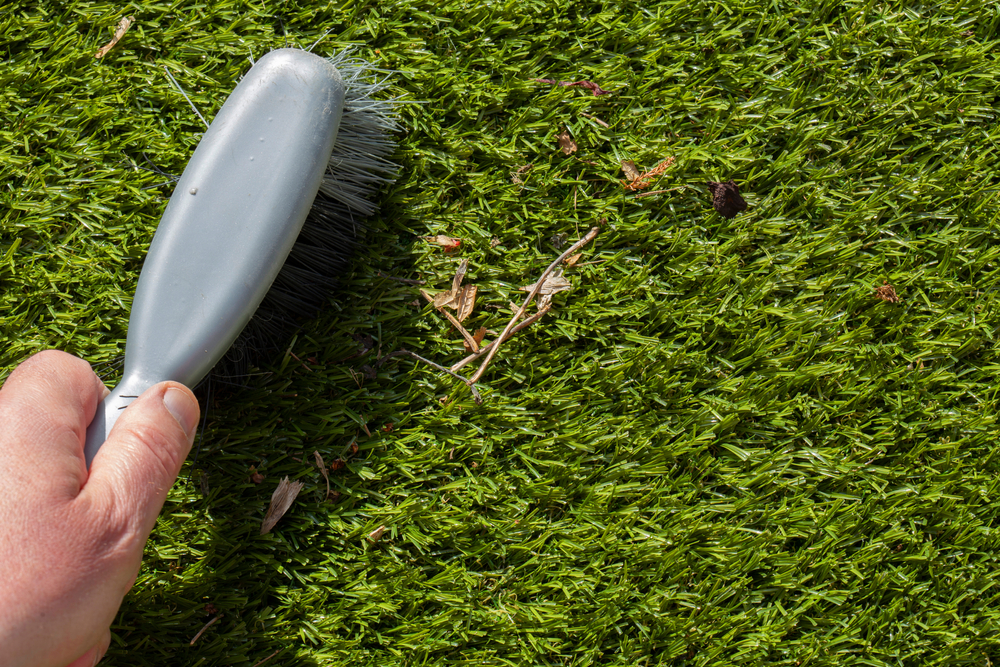
After rinsing, take a stiff-bristle brush and brush the turf against its natural grain. This step helps reset the blades, ensuring they stay upright and retain their natural appearance. For high-traffic areas, this lifting process is essential for keeping your artificial turf resilient and springy underfoot.
Tackling Stains the Right Way
Artificial turf is durable, but it isn’t stain-proof. Spills from food, drinks, or oil can quickly mar its surface. Handling stains with care prevents them from turning into long-term blemishes.
Food and Beverage Spills
For sticky spills like juice or soda, act quickly. Rinse the area immediately with cold water to remove residue. If the stain persists, mix one tablespoon of mild dish soap with one gallon of lukewarm water. Use a soft-bristle brush to scrub the problem spot gently, then rinse thoroughly.
Grease and Oil Stains
Accidental spills from barbecue grills or motor oil require a slightly different approach. First, blot the excess oil using dry paper towels; do not rub, as this could spread the stain further. Then, a solution of equal parts white vinegar and warm water is applied to the affected area. Allow it to sit for 10 minutes before scrubbing gently and rinsing off.
Stubborn Stains
For tougher stains like paint or adhesives, consider consulting the manufacturer’s cleaning guidelines or reaching out to a professional. Avoid harsh chemicals such as bleach or acetone, as these can break down the turf’s backing layer.
Managing Pet Waste and Odors
Pet owners often have extra concerns when it comes to keeping artificial turf clean. Thankfully, with the right approach, these issues are easy to manage.
For solid waste, use a plastic bag to remove it quickly, followed by rinsing the area with water. A rinse prevents organic material from breaking down and causing odors. With pet urine, it’s important to neutralize bacteria at the source. Enzymatic cleaners formulated for synthetic grass break down odor-causing compounds, leaving your lawn clean and odor-free.
To prevent lingering smells in areas frequently used by pets, sprinkle a fine layer of baking soda after cleaning. Allow it to sit for several hours before rinsing away with water. This additional step ensures your artificial turf smells as fresh as it looks.
Seasonal Maintenance Tips
Each season brings unique challenges to artificial turf maintenance. Tailor your cleaning efforts to the time of year to keep your lawn looking and performing its best all year long.
Spring
Once winter has passed, assess your lawn for damage like compacted fibers or clogs in the drainage system. A good power wash on a low setting helps remove any grime or buildup left over from the colder months.
Summer
Intense sunlight and increased outdoor activity can take a toll. Rinse your turf frequently to keep it cool and free of pollen or dust. This is also the time to address stubborn stains from grilling or outdoor dining spills.
Fall
Fall is the time for debris management. Remove fallen leaves and flowers often to prevent them from breaking down into the turf. This is also a smart time to check for weeds or standing water that could create issues during colder months.
Winter
Though artificial turf is low-maintenance during winter, it still needs some attention. Brush away snow buildup and avoid placing heavy, sharp objects such as shovels directly on the turf, as they can damage the fibers.
When to Call a Professional
Homeowners can handle most cleaning routines without difficulty, but there are times when a professional touch is beneficial.
Annual professional turf cleaning services can remove deeply embedded debris, redistribute infill, and inspect for wear and tear you might miss during regular cleaning. Additionally, professionals can resolve drainage issues or large-scale damage caused by improper use or adverse weather conditions.
A Lawn That Lasts
Regular cleaning not only keeps your artificial turf looking pristine but also ensures it performs as intended for decades to come. Develop a consistent maintenance routine tailored to your yard’s usage and environment. With the right care, your artificial turf will remain a beautiful, low-maintenance centerpiece of your outdoor space for years to enjoy.
At Veteran Patios, we specialize in turning outdoor spaces into breathtaking retreats. Whether you need advice on maintenance or want to upgrade your outdoor area, we’re here to help. Reach out today for more tips and professional artificial turf services!

FAQ Section:
Q: Why is cleaning artificial turf important?
A: Cleaning prevents odors, bacteria, and drainage clogs while maintaining the turf’s appearance, functionality, and longevity.
Q: How often should I clean my artificial turf?
A: Perform daily debris removal, weekly rinsing, and monthly deep cleaning. Adjust frequency based on usage and environmental factors.
Q: How do I handle pet waste on artificial turf?
A: Remove solid waste promptly, rinse the area, and use enzymatic cleaners to neutralize odors. Baking soda can also help with lingering smells.
Q: What’s the best way to remove stains from artificial turf?
A: For food or drink spills, rinse with water and use a mild soap solution if needed. For grease or oil, blot excess and apply a vinegar-water mix. Avoid harsh chemicals like bleach.
Q: Do I need professional cleaning for artificial turf?
A: While regular maintenance can be done at home, annual professional cleaning helps remove deeply embedded debris, redistribute infill, and inspect for wear and tear.